The Hidden Stressors Affecting Kids Today (And How to Lighten the Load)
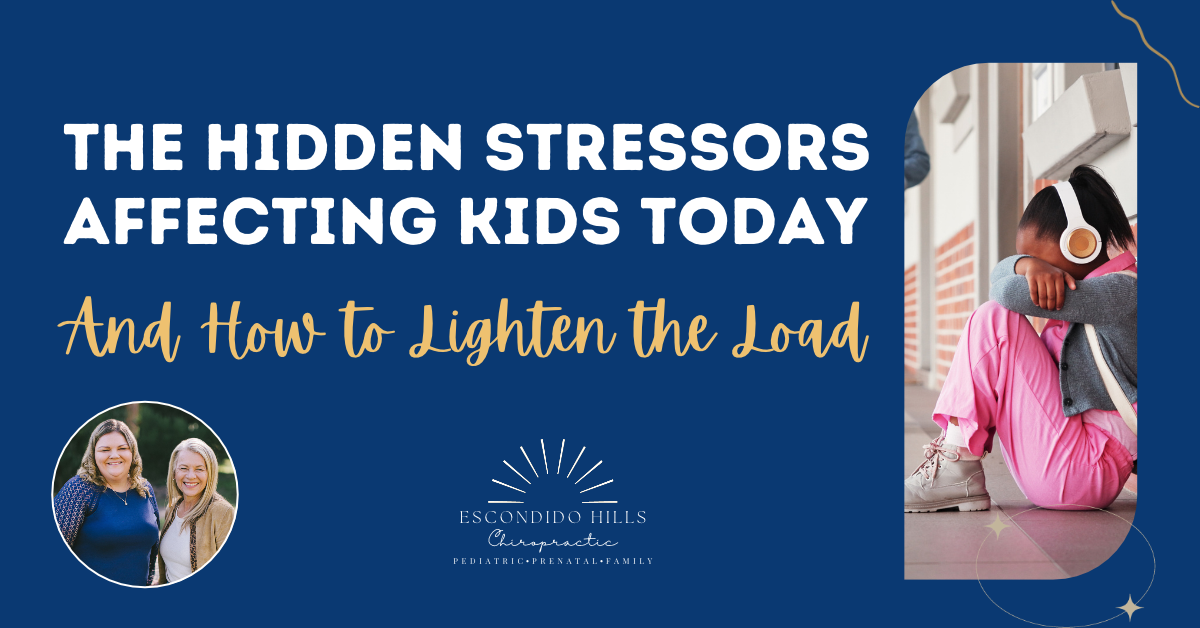
School pressure, busy schedules, and holiday excitement can add up. Here’s how to help your child find a little more calm this November.
Have you ever looked at your child and thought, What in the world are you stressed about?
They’re eating, growing, going to school, playing with friends, and generally looking pretty healthy. Yet bedtime has become a battle, little frustrations trigger big emotions, and they seem to catch every bug that comes home from school.
What’s going on?
Sometimes, the answer lies in the hidden stressors our children carry every day. And as we head into November, with school assignments piling up, tests looming, the next classroom crud making its rounds, and the holidays right around the corner, it might be time to give that stress load a little timeout.
Kids Carry More Than Backpacks
Think about a typical school day. Children must concentrate, follow instructions, navigate friendships, manage emotions, and meet academic expectations. Add extracurricular activities, screen time, busy family schedules, and the pressure to keep up with everyone else, and it’s a lot for a developing nervous system to manage.
Stress isn’t always a dramatic event. It can build quietly through repeated demands, inadequate sleep, emotional ups and downs, and too little time to simply relax.
Our bodies are designed to respond to stress. The nervous system helps us shift into action when something requires our attention and then settle back down when the challenge passes. Problems can arise when the body has difficulty returning to that calmer state.
Your kiddo may appear perfectly healthy but still struggle with irritability, restless sleep, difficulty concentrating, or frequent complaints of feeling overwhelmed. These signs don’t automatically mean something is wrong with the nervous system, but they are worth paying attention to.
Healthy-looking doesn’t always mean stress-free. Sometimes our kids need us to look beyond the obvious and ask how they’re really doing.
How Does Subluxation Fit Into the Picture?
One term we use in chiropractic care is subluxation. In neurologically-focused chiropractic, this refers to patterns of altered spinal joint movement and function that may affect sensory input to the nervous system. This is different from the medical use of subluxation to describe a partial dislocation of a joint.
Think of your nervous system as the communication network connecting your brain and body. It helps coordinate movement, process sensory information, and regulate many automatic functions. When stressors accumulate, muscle tension and changes in movement can become part of the picture.
Children experience physical stressors, too. Falls, sports, roughhousing, and the everyday bumps and tumbles of growing up all place demands on their bodies. Emotional stress and busy schedules add another layer.
In chiropractic, we consider how these factors contribute to patterns of nervous-system function over time. These patterns aren’t something parents can diagnose by watching a child, and not every stressed child has a subluxation.
If you’d like a more detailed explanation, read our article here.
At Escondido Hills Chiropractic, we look at the whole child rather than focusing on one symptom. Our goal is to understand each child’s needs and determine whether chiropractic care is appropriate as part of their overall wellness plan.
Give the Stress Load a Timeout
The good news? You don’t need to cancel every activity, move to a cabin in the woods, or homeschool your children to help them manage stress. (Although I suspect some parents have briefly considered all three!)
Start with a few simple changes.
Protect their sleep. Sleep is essential for growing bodies, learning, emotional regulation, and overall health. Establish a consistent bedtime, reduce stimulating screen time before bed, and create a quiet environment that helps your child wind down. If sleep problems persist, talk with your child’s healthcare provider. For more on this topic, click here.
Build in some breathing room. Not every afternoon needs to be filled with practices, lessons, and appointments. Unstructured play, reading, drawing, or simply doing nothing for a while can give children a welcome break.
Make room for connection. Put away the phones, sit together, and ask open-ended questions. Instead of only asking, “How was school?” try, “What was the hardest part of your day?” or “What made you smile today?” Then give them time to answer.
Watch for patterns. Ongoing sleep difficulties, persistent anxiety, unusual fatigue, or changes in behavior deserve attention. Don’t assume your child will simply outgrow everything. Your pediatrician can help identify possible causes and recommend appropriate support. For more information on how emotional stress and anxiety can be supported with regular chiropractic care, click here.
Don’t Forget the Power of Gratitude
November gives us a wonderful opportunity to practice something simple that can make a difference in how we experience everyday stress: gratitude.
Gratitude doesn’t mean pretending everything is wonderful when it isn’t. It means learning to notice the good alongside the difficult.
Research suggests that gratitude practices can support emotional well-being and may help some people cope with stress. Studies examining stress-reduction practices also suggest possible benefits for aspects of immune function, although the evidence is still developing. Gratitude is not an immune-system shield, and it certainly won’t prevent every classroom cold!
But a calmer, more connected family environment is worth cultivating.
Try a simple family gratitude ritual at dinner or bedtime. Ask everyone to share one good thing from the day. It could be a friend who made them laugh, a favorite meal, a beautiful sunset, or simply making it through a difficult math test.
And parents, you get to participate, too! Our children learn a great deal by watching how we handle our own stress.
How Chiropractic Care May Fit In
When families come to see us, we take time to understand the child’s health history, daily challenges, and individual needs. Depending on the situation, an examination will help us determine the root cause of what your child is experiencing.
Gentle, age-appropriate chiropractic adjustments are intended to address specific nervous system dysfunction. Some families report improvements in comfort or sleep during care, but every child is different. Some studies show that consistent chiropractic care can help immune function too!
This November, Let’s Make Room to Breathe
As the holidays approach, remember that your kiddos don’t need a perfect schedule, a perfect report card, or a perfectly organized family calendar. They need room to grow, time to rest, and people who notice when they’re struggling.
Sometimes the most helpful thing we can do is slow down long enough to listen.
If you’re concerned about your child’s stress, sleep, or overall well-being, Dr. Angela and Dr. Ariel are here to answer your questions and help you explore appropriate options for your family. Call Escondido Hills Chiropractic at 760-740-9799 or visit our Helpful Articles page for more information on children’s health, sleep, and nervous-system wellness.
Here’s to a November filled with a little less rushing, a little more rest, and plenty of reasons to give thanks!